Create Account
Manage my channels
Watch later and create collections
Manage your email subscriptions
Exclusive offers and opportunities
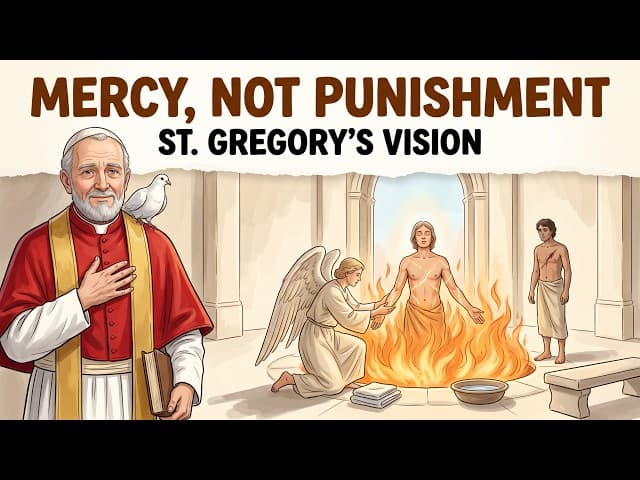
A monk appears to his own brother in a vision, glowing, and says one sentence, I have been freed. Thirty days earlier, that same monk had died disgraced, buried without ceremony, punished publicly for breaking a vow. The man who ordered that punishment was also the one who quietly arranged for thirty Masses to be offered for him afterward.
This video looks at Pope Gregory the Great's writing on purgatory in his Dialogues, including the story of the monk Justus and the origin of what are still called Gregorian Masses today. We look at why Gregory, known for being unusually pastoral even by his own era's standards, defended purgatory as mercy rather than punishment, how he read Christ's own words in Matthew's Gospel to make his case, and how Saint Paul's image of a foundation tested by fire shapes the Church's understanding of what purgatory actually purifies. We also bring in Saint Catherine of Genoa and Saint Augustine, who each describe the same mercy from a slightly different angle centuries apart.
SOURCES:
DISCLAIMER:
This video is made for educational and spiritual reflection purposes only. It does not constitute formal theological instruction, pastoral counseling, medical advice, psychological advice, or mental health guidance, and it is not intended to promote hatred, division, or disrespect toward any individual or group.