08:55
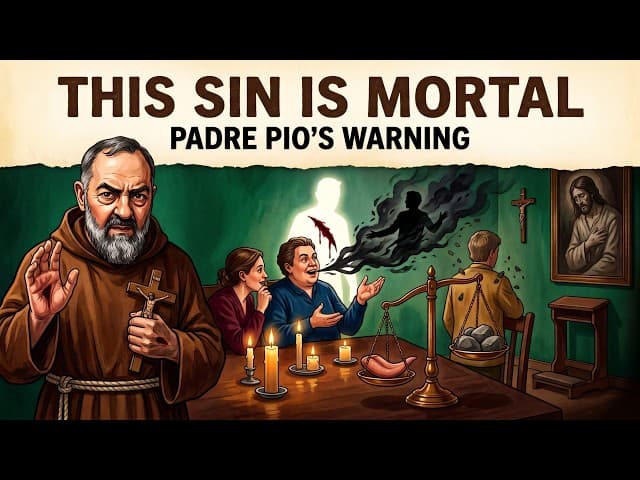
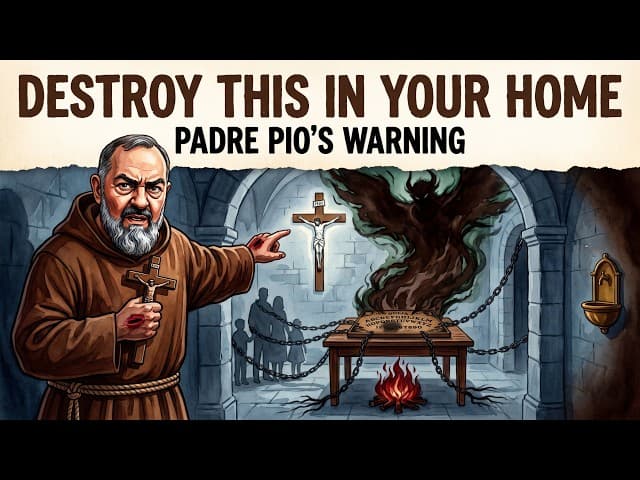
Padre Pio gave a non-negotiable command when he found these specific objects in a home: "Remove it. Destroy it. Do not keep it in your house." Despite being a saint of immense mercy, his sensitivity to demonic influence meant he could see the spiritual vulnerability these common items created.
In this video, we examine the specific objects Padre Pio warned against, items many people keep innocently as gifts or decor, unaware of the spiritual "trap" they represent. For fifty years at San Giovanni Rotondo, the Stigmatist priest identified a consistent pattern of spiritual danger hidden in plain sight. We explore why these objects anger God, how they align with 2,000 years of Catholic teaching on superstition, and why destroying them is often the first step toward spiritual peace.
SOURCES:
Documented testimonies of Padre Pio's spiritual children regarding his counsel on occult objects and superstitious items.
Records and accounts from the Capuchin friars at San Giovanni Rotondo.
Catechism of the Catholic Church, paragraphs 2110 through 2117, on superstition, divination, magic, and forbidden spiritual practices.
Acts of the Apostles, chapter 19, verses 18 through 19, account of Ephesian converts publicly burning their books of magic after conversion.
Published works documenting Padre Pio's life, ministry, and spiritual direction.
Canonization of Saint Pio of Pietrelcina by Pope John Paul II, June 16, 2002.
DISCLAIMER:
This video discusses Catholic teaching on superstition, divination, occult practices, and spiritual warfare as applied by Saint Pio of Pietrelcina in his ministry. The content is grounded in defined Catholic doctrine from the Catechism of the Catholic Church and Sacred Scripture. This video is not intended to create fear, scrupulosity, or anxiety about ordinary household objects. The content presented here is for educational and spiritual reflection purposes only and does not constitute formal theological instruction, pastoral counseling, medical advice, or psychological advice.