08:55
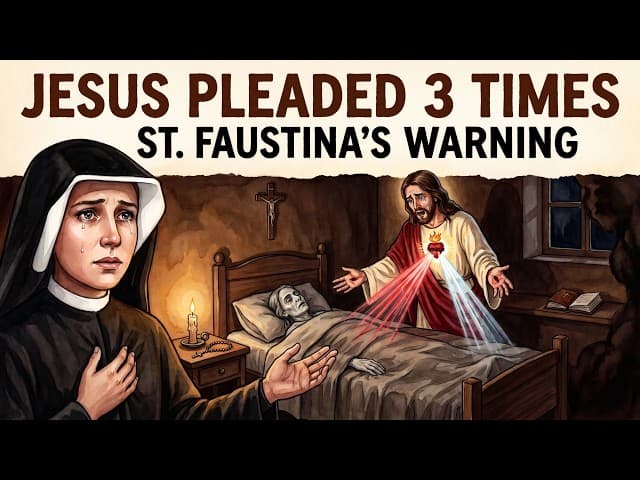
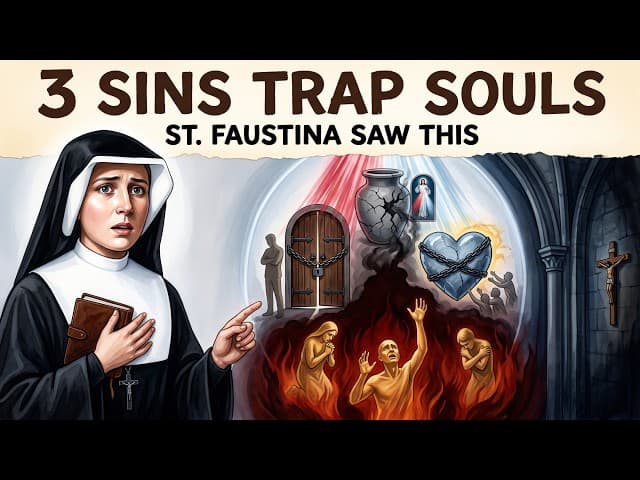
Jesus pleaded three times with a soul that had given up entirely, yet most people who tell this story get the ending completely wrong. While we often hear of God’s infinite mercy, Saint Faustina Kowalska recorded a much more sobering reality in Diary entry 1486. She witnessed a final, desperate conversation between Christ and a dying soul that refused Him until the very end.
This video examines the full account of that encounter and the terrifying moment that most retellings leave out. We explore the theological truth behind prevenient grace and why the Church teaches that God respects human freedom even at the doorstep of eternity. By looking at parallel accounts from Saint John Vianney and Saint Thérèse of Lisieux, we see a consistent pattern: God pursued this soul relentlessly, but the final choice remained in the hands of the one dying.
SOURCES :
Diary of Saint Maria Faustina Kowalska, Divine Mercy in My Soul, Entry 1486, account of Jesus pleading three times with a dying despairing soul.
Catechism of the Catholic Church, paragraph 2001, teaching on prevenient grace and God's initiative in salvation.
Catechism of the Catholic Church, paragraph 1037, teaching that God predestines no one to hell and that eternal separation requires persistent free rejection of God.
Account of Saint John Vianney consoling a widow whose husband jumped from a bridge, revelation of final moment repentance through Mary's intercession, documented in Catholic Digest and historical records of the Curé of Ars.
Account of Saint Thérèse of Lisieux praying for convicted murderer Henri Pranzini, his final moment conversion at execution kissing the crucifix three times.
Gospel of Luke, chapter 23, verses 42 through 43, the Good Thief repenting in his final hour and Jesus's immediate promise of paradise.
Gospel of Luke, chapter 15, verse 4, parable of the lost sheep and the shepherd's relentless pursuit.
Canonization of Saint Maria Faustina Kowalska by Pope John Paul II, April 30, 2000.
DISCLAIMER :
This video discusses private revelation recorded by Saint Maria Faustina Kowalska. Private revelation, even when recognized by the Church as worthy of belief and coming from a canonized saint, is not binding on the faithful in the same way as Sacred Scripture or defined doctrine. The content presented here is for educational and spiritual reflection purposes only and does not constitute formal theological instruction, pastoral counseling, medical advice, or psychological advice.