10:41
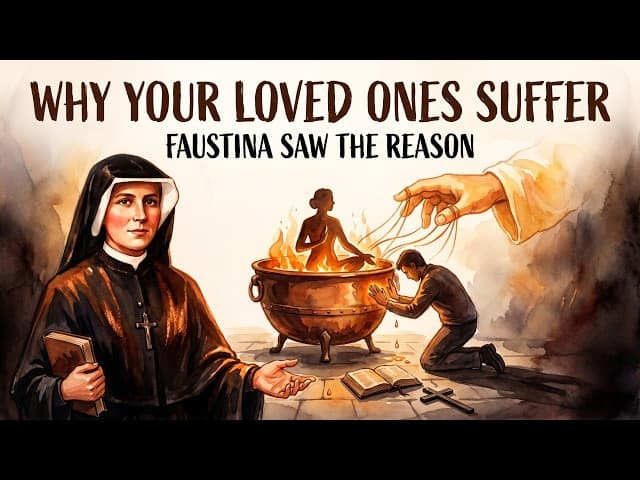
This video explores the profound pain of witnessing a loved one's suffering, a unique form of grief that often challenges faith more deeply than personal hardship. We examine how this experience can impact spiritual growth and why finding christian encouragement during such hard times is essential. Discover how to navigate this complex emotional landscape and maintain hope even when unable to alleviate another's pain.
We examine why Faustina described God's use of suffering as precise and targeted rather than random, addressing the exact thing in each person preventing them from reaching what God has prepared for them. Why she identified the depth of love between two people as creating a unique spiritual opportunity God uses deliberately, forming both the suffering person and the one watching simultaneously through one shared experience. The specific kind of intercessory prayer she described in diary entry 963 as one of the most powerful spiritual forces available to the living. And what she recorded in diary entry 1584 about what God told her He never does without giving something greater in return.
This is not a video that offers easy comfort or simple explanations for why people suffer. It offers something more honest and more useful than either. A theologically grounded framework, drawn from one of the most carefully documented spiritual diaries in Catholic history, for understanding what God is doing in the suffering of someone you love. And a practical answer to the most difficult question most people carry silently. If God loves this person even more than I do, why is He allowing this to happen to them?
DISCLAIMER:
This video is based on the published diary of Saint Faustina Kowalska, "Divine Mercy in My Soul," which has received Church approval as a private revelation containing nothing contrary to Catholic faith and morals. Specific diary entries referenced include 1697, 1512, 963, and 1584. Additional theological content draws from Thomas Aquinas's Summa Theologica on divine providence. All content is presented for educational and spiritual reflection purposes only. As noted in previous videos on this channel, private revelation, even when approved by the Church, is not binding doctrine, and Catholics are not required to believe in Saint Faustina's specific recorded locutions or visions. The theological framework presented here regarding suffering, divine providence, and intercessory prayer is consistent with established Catholic teaching but is offered as spiritual reflection rather than a definitive or comprehensive theological statement on the mystery of suffering. This video does not constitute professional psychological advice or grief counseling. If you are struggling with the suffering of a loved one in ways that are significantly affecting your mental health or daily functioning, please seek support from both a qualified mental health professional and a trusted spiritual director or confessor. Viewer discernment is always encouraged.