08:33
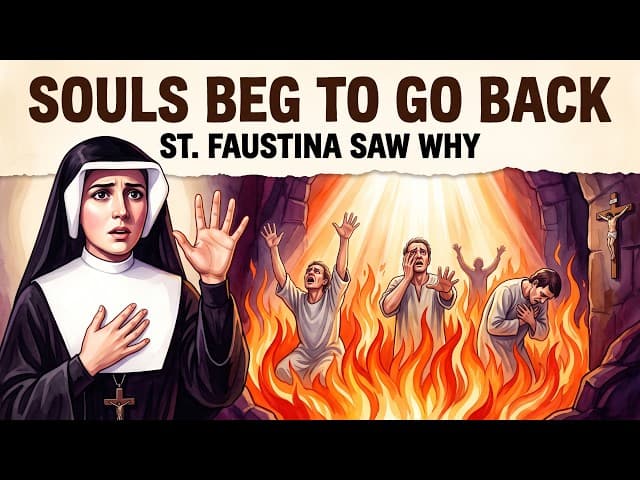
There is a specific category of soul that appears repeatedly in Faustina's diary. Not the openly sinful soul. Not the indifferent soul. The soul that tried, genuinely and seriously, and at some point stopped. The soul that did not walk away from God in rebellion but in exhaustion. And what Faustina recorded about what God thinks of that specific soul is something most people who have ever reached that point have never heard said clearly.
This video examines what Faustina recorded about the soul that considers itself too far gone for mercy and the specific interior argument it constructs to justify staying where it is. Why she consistently distinguished between formal despair and spiritual exhaustion, and why that distinction changes everything. What Christ communicated to her about the relationship between the greatness of a soul's misery and its right to mercy. How the parable of the prodigal son in Luke 15 functions in Faustina's recorded understanding not as sentimental consolation but as a precise description of divine attention toward returning souls. And what diary entries 1321 and 1507 reveal about why the soul at the complete end of its own resources is positioned for something that self sufficiency was quietly preventing.
SOURCES:
DISCLAIMER:
This video engages with the approved private revelation of Saint Faustina Kowalska as contained in her Church approved diary "Divine Mercy in My Soul." Private revelation is considered worthy of belief but not required belief, and this distinction is clearly maintained throughout the video. This video is offered for educational and spiritual reflection purposes only and does not constitute formal theological instruction, pastoral counseling, or mental health support. If you or someone you know is experiencing serious hopelessness or despair, please seek support from a qualified mental health professional alongside spiritual guidance. Viewer discernment is always encouraged.