Create Account
Manage my channels
Watch later and create collections
Manage your email subscriptions
Exclusive offers and opportunities
Do historical facts speak for themselves?
Carl Becker thought the suggestion was absurd. Even if a historian could present every fact, he argued, “the miserable things” would remain silent. Facts become historically intelligible only when the historian discovers the connections that bind them into a course of events.
But this raises a more difficult problem. If historians select, organize, and interpret the evidence from within their own standpoints, is history objective? Or is it merely opinion dressed in the language of scholarship?
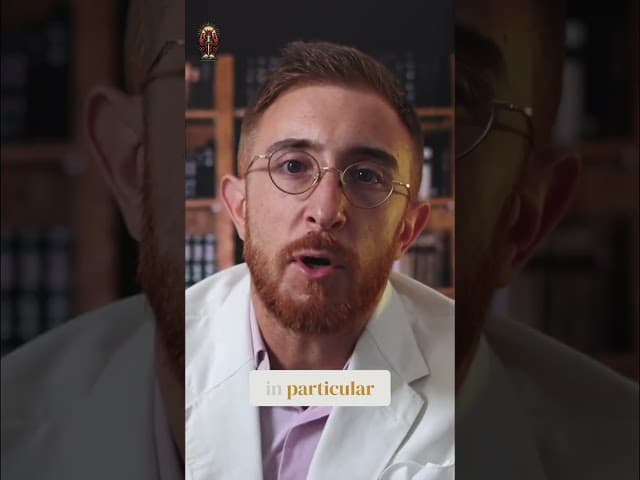
In Episode 9 of this series on Bernard Lonergan’s Method in Theology, we examine History and Historians, Lonergan’s extended test of the account of historical knowledge developed in the previous chapter.
Lonergan compares nineteenth-century handbooks of historical method with the reflections of practicing historians such as Carl Becker, R. G. Collingwood, and Henri-Irénée Marrou. Across their differences, he finds confirmation of a central point: historical facts and their intelligible connections are not discovered in two completely separate stages. They emerge together through a cumulative process of research, understanding, and judgment.
The episode also explores one of Lonergan’s most important distinctions: perspectivism is not relativism. Different historians may produce different but complementary accounts because the historical reality they investigate is enormously complex. Yet some conflicts run deeper. They arise from opposed horizons that determine, before the evidence is examined, what the historian considers possible.
Along the way, we consider:
History is rewritten in every generation, but this need not undermine its objectivity. Some differences arise because finite historians approach an inexhaustibly complex past from different perspectives. Other disagreements arise from incompatible horizons. Critical history can accommodate the first kind, but it cannot resolve the second.
That task belongs to the next functional specialty: Dialectic.
Chapters
00:00 Facts That Stay Silent
02:16 A Garment Without Seam
05:05 Data and Facts
07:25 Three Historians
11:46 Perspectivism, Not Relativism
16:09 Horizons and Conversion
20:40 Science and Scholarship
In the next episode, we turn to Dialectic and ask how theology can bring conflicts rooted in opposed horizons into the open, distinguish genuine positions from counterpositions, and move beyond disagreements that historical research alone cannot settle.
How do we recover meaning in a fragmented world?
Short reflections on consciousness, conversion, and responsibility.
Read the full essays at Mediated by Meaning: https://mediatedbymeaning.substack.com
#meaning #philosophy #faith #psychology #jordanpeterson #catholic #lonergan #selfunderstanding