08:33
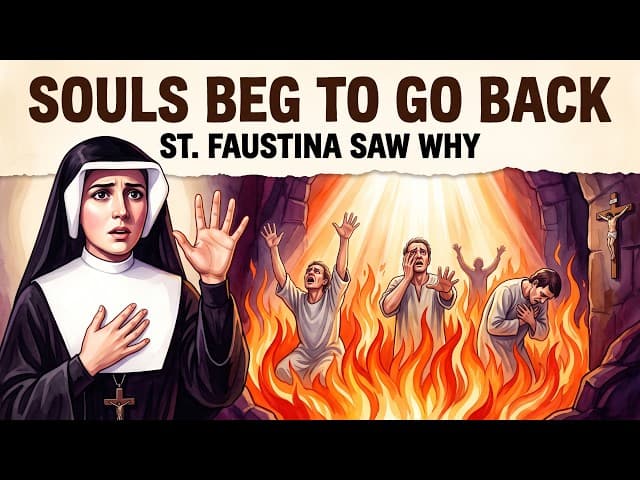
Faustina Kowalska left behind a diary that the Church initially suppressed, investigated for nearly two decades, and ultimately not only cleared but elevated to approved private revelation. Most people familiar with the Divine Mercy devotion have never read what is actually inside it.
This video examines what Faustina recorded in diary entries 1036 and 1486 about the specific structure of what the soul encounters at death. Why her description of mercy preceding judgment is not a departure from Catholic doctrine but a precise articulation of what the Church has always taught about the particular judgment, expressed through personal mystical witness. The specific detail she recorded about what is offered to every soul at the final moment, what she was careful not to claim, and where theologians continue to discuss the boundaries between mystical experience and formal doctrine. How Saint John Paul II's encyclical "Dives in Misericordia" provides the theological framework within which her descriptions make their fullest sense. And what her diary consistently taught about the connection between how a soul lives and how it arrives at that final moment.
SOURCES:
Saint Faustina Kowalska, "Divine Mercy in My Soul" (diary entries 1036 and 1486, on the moment of death and divine mercy)
Catechism of the Catholic Church, paragraph 1022 (on the particular judgment)
Saint Thomas Aquinas, Summa Theologica (on the nature of the particular judgment as interior illumination)
Saint John Paul II, encyclical "Dives in Misericordia" (1980, on mercy as love's second name and divine justice within mercy)
Father Michael Sopocko, spiritual director to Saint Faustina (documented role in the preservation of her diary)
DISCLAIMER:
This video presents the approved private revelation of Saint Faustina Kowalska as contained in her Church-approved diary "Divine Mercy in My Soul," alongside formal Catholic doctrinal sources including the Catechism of the Catholic Church and papal teaching. The Divine Mercy devotion and Faustina's diary have been formally approved by the Catholic Church and recognized as worthy of belief as private revelation.
All descriptions of the moment of death and what follows it are presented within the strict boundaries of approved Catholic teaching on the particular judgment, divine mercy, and human freedom. This video does not claim that all souls are saved, does not contradict Catholic teaching on the reality of hell, and does not present universalism or any doctrine inconsistent with the Catechism of the Catholic Church.
This video is offered for educational and spiritual reflection purposes only. It does not constitute formal theological instruction, pastoral counseling, or spiritual direction. Viewer discernment is always encouraged.